


When you delve into local history, names, events, connections and explanations emerge, as if from a crystallized past, giving meaning both to us and to History with a capital H.
Leafing through texts and notarial deeds of a small town like Noci, one is captivated as a veil lifts, offering unexpected explanations for why its inhabitants differ from those of another town just a few kilometres away.
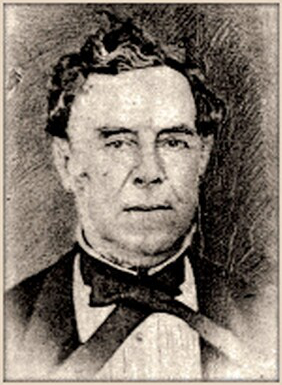
These are the feelings that arise when reading the «Historical Conferences» by Pietro Gioja, who was the first, at the end of the 19th century, to undertake this work.
Of course, we won’t attempt to summarize his remarkable work here, but the love of nature is a feeling we want to convey — one that is still very much alive among the roughly 20,000 residents of this delightful town, nestled among Alberobello, Castellana Grotte, Gioia del Colle, Mottola (TA) and Putignano in the province of Bari, at an altitude of between 331 and 470 metres above sea level.
The town’s history begins as early as the dawn of the year 1000, but it was in 1150, as the Kingdom of Naples passed to the Normans, that it began to be appreciated for the beauty of its setting and the richness of its woods — enough to prompt William, known as “the Bad”, Prince of Taranto, to pay it a careful visit.
100% Organic Products
All our plants are grown without the use of herbicides or fertilizers. The fruit they give us is organic and processed without preservatives or colourings.
[rev_slider_vc alias=”prodotti”]
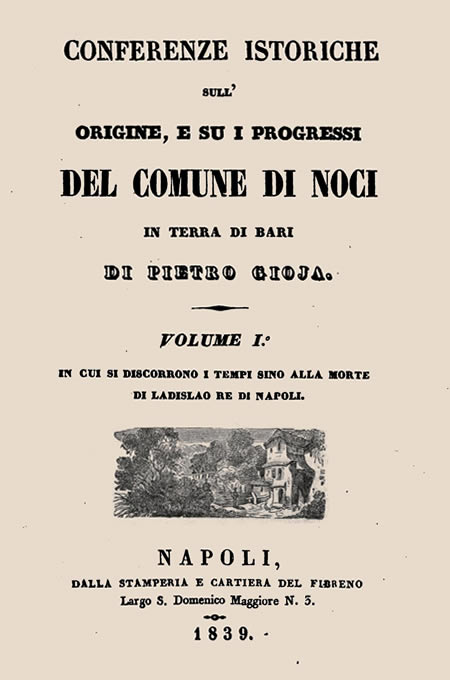
«And so – writes Gioja in his fourth conference – when the farmer’s hand had not yet stripped the land of its giant produce, when the axe’s blow did not yet echo among the darkest ravines of our valleys, when deer, stags and wild boar found their safest refuge there, then indeed the woods of Noci were a call to friendship, a gathering place of joy for the noblest knights of the great cities, who, forming into companies led by prominent figures, and at times by sovereigns themselves, rode there joyfully to revel in the pleasures of the hunt».
Much of its woodland heritage was lost around the mid-1800s, as the need for farmland grew. In 1871, deforestation began in parts of the Bonelli wood, followed in 1885 by parts of the Poltri wood, and so on.
It is a history that can be read through the local farmsteads (masserie): the traces left behind are considerable, and a common thread connects our Masseria Dirupo to the fabric of local history.
In the 1947 census, Masseria Dirupo was recorded as covering 19.13 hectares.
The historical and environmental heritage, then, is considerable — but one thing is certain: the love with which we relate to this land, where our roots lie.